نظام تشغيلي عملي تستخدمه فرقك فعلاً.
نموذج مؤسسي مترابط يدمج الحوكمة، وإدارة الأداء، وتطوير القدرات، والجاهزية للمعايير في نظام تشغيلي واحد، مبنيّ من أجل أداء مؤسسي مستدام.
معظم المؤسسات تمتلك المكوّنات. والفجوة في كيفية ترابطها.
في معظم المؤسسات، تُدار العمليات — التخطيط الاستراتيجي، وتصميم المؤشرات، وتوثيق الحوكمة، وبناء القدرات، والجاهزية للمعايير — كمسارات منفصلة، بفرق منفصلة، وجداول زمنية وميزانيات منفصلة. وقد يبدو كل مسار مكتملاً بمعزله، لكن الفجوات بينها هي حيث ينهار التنفيذ.
يعالج نموذج MSSC هذه الفجوات بربط مكوّنات الأداء المؤسسي في نظام واحد عامل.
ست ركائز. منطق مؤسسي واحد. كلٌّ منها يُعزّز التالية.
قيمة إطار MSSC لا تكمن في الركائز منفردة، بل في طريقة تكاملها.
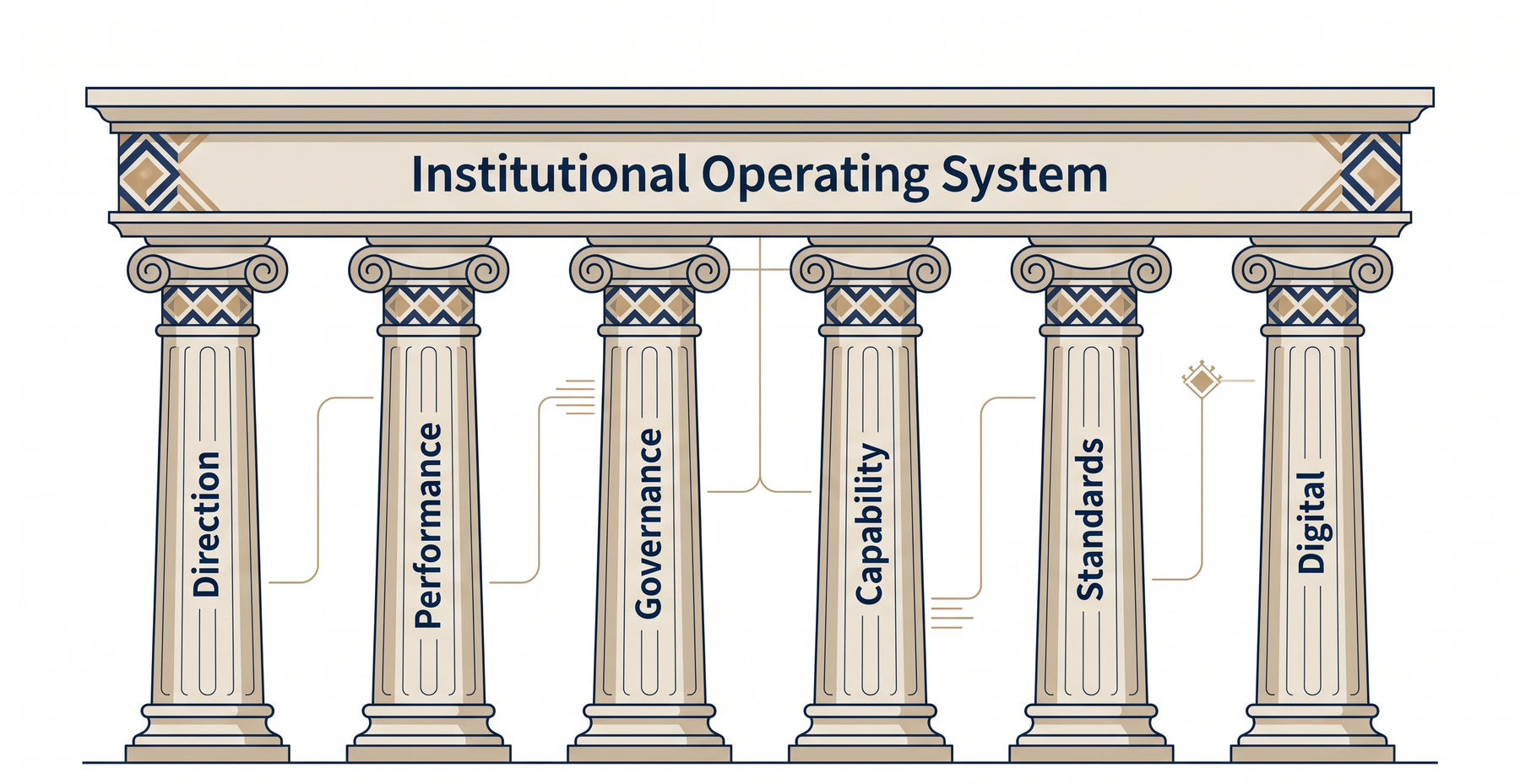
التوجّه يخلق وضوح التنفيذ.
يبدأ النظام المتماسك بتوجّه استراتيجي واضح يُترجَم إلى ملكية وأولويات وإيقاع مراجعة. وبدون هذا الأساس، تعمل الفرق دون مواءمة.
الأداء يخلق انضباط الإدارة.
بمجرد وضوح التوجّه، يجب قياس الأداء عبر بنية تتيح إدارة فاعلة — مؤشرات تتدرّج وتُراجَع وتُفسَّر وتُربَط بالقرارات.
الحوكمة تخلق الاتّساق.
يتطلّب التحسين المستدام للأداء صلاحيات قرار واضحة، وقواعد تشغيل، ومنطق عمليات. والحوكمة تخلق الانضباط المؤسسي الذي يتيح توسّع التنفيذ.
القدرات تجعل النظام يصمد.
تفشل الأطر القوية حين تفتقر الفرق الداخلية إلى الكفاءة لتطبيقها. وهذه هي المرحلة التي تتجاهلها معظم المشاريع. أما نحن فلا.
المعايير تزيد الثقة المؤسسية.
تعزّز المواءمة مع المعايير المعتمدة البنية والمساءلة وثقة الأطراف المعنية — لا كنشاط تسويقي، بل كدليل على نضج تشغيلي حقيقي.
التمكين الرقمي يحسّن الوضوح.
تجعل الأدوات الرقمية التقارير والتعلّم وسير العمل أكثر سهولةً وأيسر استدامةً — مُضخّمةً النظام دون أن تحلّ محلّ من يُشغّلونه.
لا يُسلَّم النظام كوثائق. بل يُطبَّق كممارسة تشغيلية.
خمس مراحل منظّمة — كلٌّ منها تحمي استثمار المؤسسة، وتبني ثقة الفريق، وتضمن قدرة المؤسسة على العمل باستقلالية بعد التسليم.
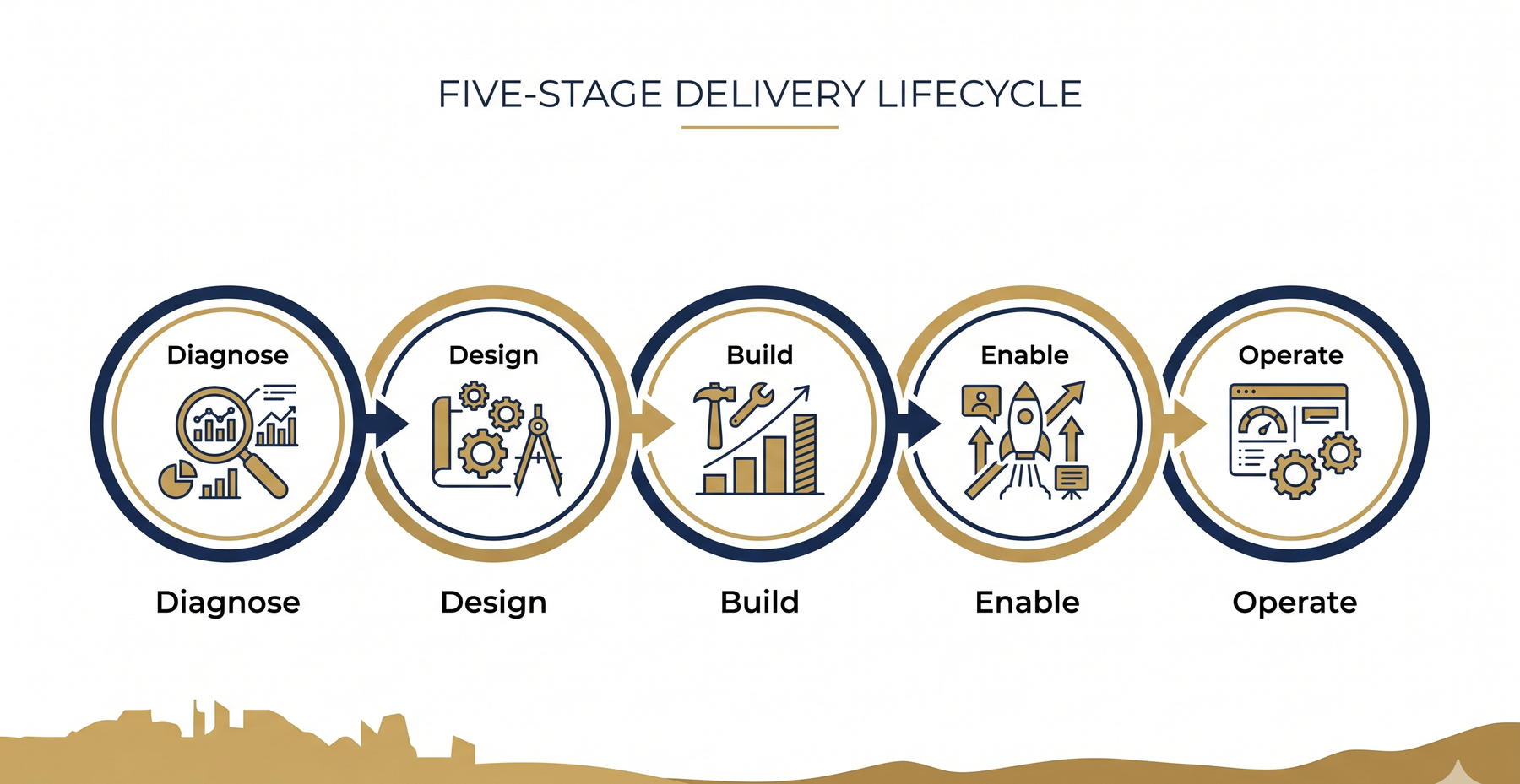
التشخيص
تقييم الجاهزية الحالية، وتحديد الفجوات، ووضع الأولويات قبل التوصية بأي مسار.
التصميم
تحديد نظام الحالة المستهدفة، ونموذج الحوكمة، ومنطق التطبيق — بما يلائم سياقك التشغيلي.
البناء
تطوير المخرجات التشغيلية اللازمة للتطبيق — السياسات، وأطر المؤشرات، وبنية العمليات، وهياكل الصلاحيات.
التمكين
تجهيز الفرق الداخلية عبر تعلّم قائم على الأدوار ودعم تبنٍّ منظّم. مُضمَّن في كل مشروع — لا اختياري.
التشغيل والتحسين
ترسيخ إيقاع الحوكمة، ودورة مراجعة الأداء، وعمليات التحسين المستمر — بحيث يقوى النظام بالاستخدام.